


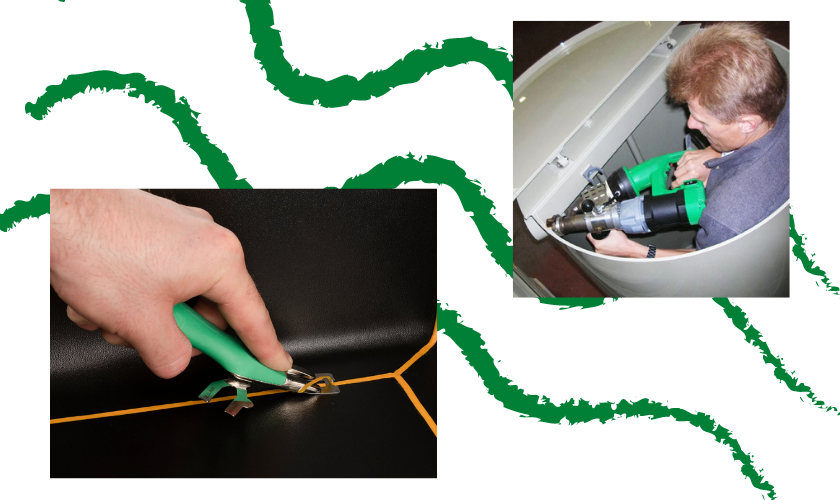
Plastic continues to be highly useful in all sorts of different fields and is a vital component that many industries rely upon heavily. Plastic welding is utilized by engineers and product designers to bend the material to their will and create the kinds of useful products for consumers all over the world.
So, if you’re interested in plastic welding and the types of trends it produces, this is exactly what we will be discussing in a higher level of detail in the following blog post.
Different Types of Plastic
While there are thousands of different types of plastics out there, they can be broadly divided into a couple of main categories: thermoplastic and thermosetting plastic. As for the former, they can go through a number of cycles of melting and solidifying without affecting the overall structural integrity of the material. They are often provided as sheets or pellets and can be melted as many times as required into the desired shapes that the company needs them to be in. There are a few common examples of these, including acrylic, nylon, and polyester. Next up, we have thermosetting plastics. Essentially, these are designed to retain their solid structure and are not meltable. This is down to the simple fact that the molecules will not reform again once the plastic has cooled down. One of the other main things to note is that this type of plastic cannot be recycled.
Plastic Welding Processes
Now, we will be examining the different processes involved in plastic welding in a higher level of detail. Obviously, each of them has its own individual purpose, as well as a set of advantages and disadvantages that are worth discussing in a higher level of detail. However, they have in common the basic components of a welding job, which include using heat and pressure and a filler material that helps to fuse the two different bits together. While the process itself can be relatively speedy and affordable, getting the right process for the job at hand is all-important. Let’s take a closer look at a few of your main options right here and now.
Types Of Plastic Welding
First of all, we have the manual plastic welding process of hot gas welding, which relies upon the dry air and heat that is generated from a hot-air welding gun. It is a piece of equipment that is specifically designed to soften up the parts in a plastic joint and filler rod, allowing them to form as one. It is known to be a relatively quick process that is great for manufacturing smaller products such as plumbing fittings.
Another popular type of welding is known as friction welding. Rather than using a gun as in hot gas welding, it uses friction to create the heat that joins two pieces together. As well as being an efficient process that can form the desired object in a matter of seconds, it also helps to clean the surface, helping to create a product that is close to the finished thing.
The third process that we are going to be discussing is solvent welding. Rather than using heat to join together the main pieces of plastic, it instead relies upon a solvent to soften up the pair of pieces. Once this has evaporated off, you should find that the two pieces of plastic have welded together and hardened up in a significant way.
Proper Welding Equipment
Just as with welding any other materials, it is important that you choose the right ones for welding. In plastic welding, some of the main components that are going to be needed include welders, electrodes, angle grinders, and clamps. As well as this, it is certainly worth going through a checklist to ensure that you have all of the proper safety and protective equipment. A helmet, gloves, and leather clothing should certainly all be included on this particular list. Like many other parts of the welding industry, there has been a big shift towards robotics and automation, which is certainly worth keeping a close eye on.
So, there you have a bit more information about plastic welding and some of its main processes. While this is a constantly changing job, it is important that you know the basics before pursuing the more advanced aspects of it in your industry to ensure you can be successful in it and create quality products.