


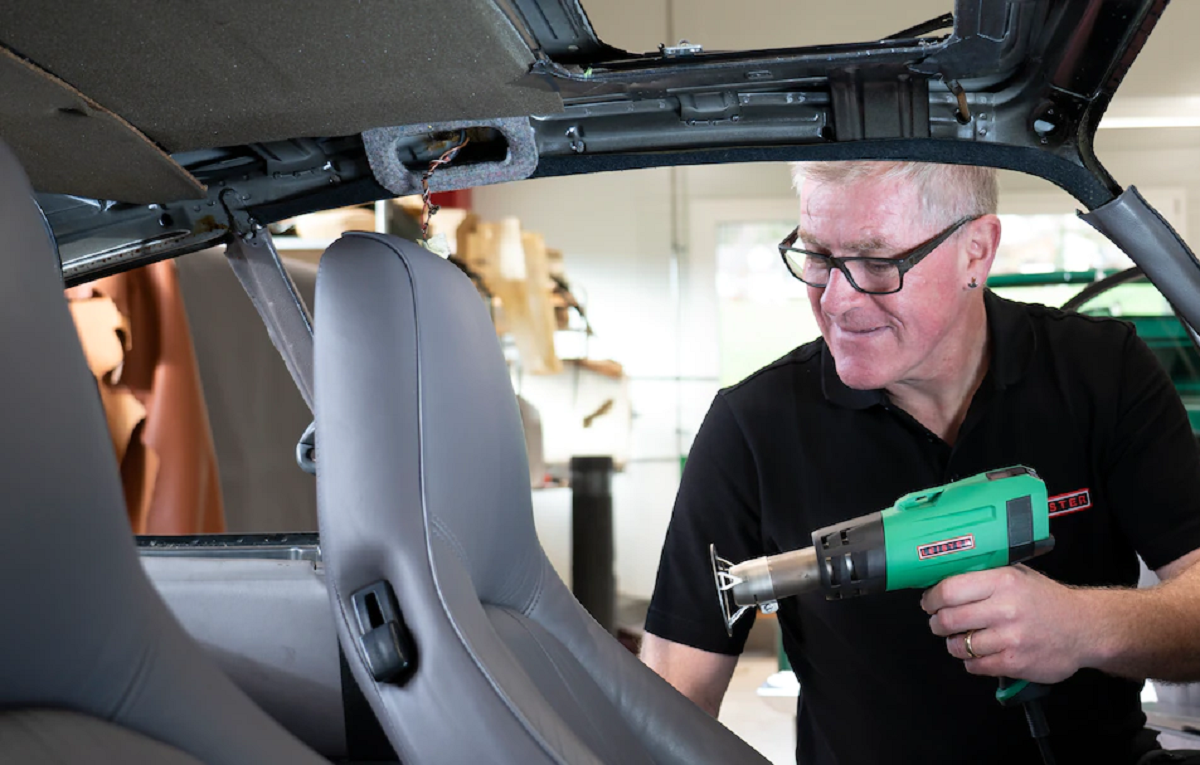
Hot air blowers – otherwise referred to as heat guns – can be used for a wide variety of tasks in personal and industry settings. As a beginner, here’s what you need to know about heat gun use.
Hot air blowers have quickly become a mainstay of any discerning DIY enthusiast’s toolkit. This is because they can be used for a wide range of tasks – from removing wraps and bumper stickers from cars to melting frozen pipework. They have replaced old-school bottled gas and paraffin blowlamps as the go-to tool for stripping paint. What’s more, heat guns are less dangerous, more practical, and easier to use.
Additionally, because they are relatively light and have few controls, heat guns are simple to use. This means you can learn to use them quickly and fairly easily without being daunted by the heaviness of the tool or myriads of settings. With this in mind, here’s what you need to know about using a hot air blower and how easy it is to learn how to use one.
The basic heat gun controls are easy to use
A heating gun tool is a straightforward machine. It looks and feels like a heavy-duty hair dryer and can be operated just as easily once you understand the basic heat settings. As with a conventional hair dryer, a compact heat gun uses a blower fan to pull air into the back of the power tool. Once the air is inside, it is shot through an electric heating element and blasted through the nozzle at high pressure.
Given how simple the design is, the usability of a cordless heat gun is equally as straightforward. You just direct the gun toward whatever you want to heat and move it back and forth, making sure to spread the heat evenly, reducing the risk of a fire hazard.
Tip: If you’re a beginner at using a heat gun, ensure a good feel for the hot air blower being in your hands and understand its settings before you start your project.
Finding the proper distance between the material and the heat gun may take some time, depending on which surface you are heating. Consider starting with a farther distance and slowly moving closer to the material to find the perfect drying distance. But never put the heat gun directly on the material to be dried as that could pose a danger.
You will also need to learn how to spread the heat around the surface, depending on what it is you’re trying to achieve. Given the extreme heat of hot air guns, you should move the gun back and forth to expose the material to an even heat, thus reducing fire risk.
The temperature itself is also adjustable with many heat guns. While a basic air mover only has one temperature setting and one blower setting, a more sophisticated dual temperature heat gun has two or more temperature settings. Although you will be required to use the maximum temperature to complete a project to remove paint, you may need a lower temperature for tasks like drying varnish, shrink tubing, and drying damp wood.
Different types of a heat gun
There are a few different types of heat guns to consider. It is important to understand these various types to ensure you have the right heat gun for the job. First, there are electric heat guns. This type comes as a corded or cordless heat gun and is by far and away the most popular. They are usually the most cost-efficient option and provide adequate heat for most tasks.
A good alternative to electric heat guns is the infrared gun. These provide less heat than a standard electric heat gun but are more than enough for many DIY projects. However, you can also use gas heat guns fuelled by propane or butane gas, but these are more expensive and often not a needed option. Gas heat guns require constantly replacing canisters, which can quickly become expensive, so electric heat guns are more commonly used than gas ones.
Alternatively, you may need industrial heat guns, which provide more intensive heat. These are typically used in factories for large-scale jobs. As a result, they are probably too bulky, expensive, and impractical for individual use, especially given their limited temperature settings. However, if you need an industrial heat gun, you may need a related item like inflation blowers (often used for hot air ballooning) and regenerative blowers.
What can you use a heat gun on?
You can use a heat gun for a variety of applications. These include thawing frozen pipes (which is incredibly useful if you live in an area that drops below sub-zero regularly during winter months), stripping paint, stripping wallpaper, furniture repairs, ripping up old flooring, as well as removing stickers from cars, walls, or glass. In addition, a heat gun can also be used for water damage restoration (drying out damp materials), material sterilization, and shrink wrapping.
What also makes heat guns so beneficial is their usability. Whether it’s the maritime industry, aviation sector, or automotive field – just to name a few – many manufacturing processes require high-quality heat guns. At the same time, anyone who does small or large DYI projects also requires the use of heat guns.
Hot air blowers can make your project easier and completed faster. Fortunately, they are easy to use, and with a bit of practice, anyone can become a pro! If you need some assistance, though, please get in touch with us. We’re happy to help advise on what hot air blower may be the best for your project and provide you with instructional use.