


Welding is an ancient and essential crafting technique that has shaped human history. Having had millennia to develop, welding has created countless transformations. Thanks to welding, metal, steel, aluminum alloy, copper, iron, and plastic are the most common materials to transform.
Where once manual welding was the only option, automatic welding has become very popular across various industries. While automatic welding is relied upon by many, the world’s current fixation with autonomous manufacturing solutions is changing, and often disrupting, the welding industry.
Automation can be a superb benefit, but there are also a few negatives to consider. Below are a few ways in which it’s affecting the industry today.
A Decrease in Creativity
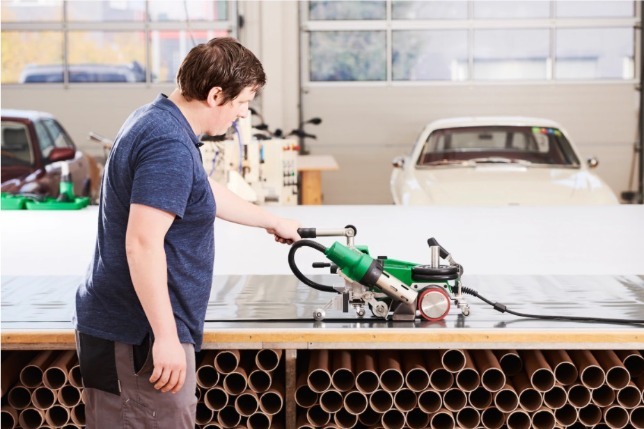
Leister supplies welders with highly efficient handheld tools worldwide, offering professionals the convenience and flexibility to perfect the smallest and most creative details, no matter the environment.
While autonomous welding machines can absolutely be programmed for extreme accuracy, even down to the smallest task, they don’t provide the level of creativity that a manual tool can.
A competent, experienced welder with the right tools can quickly complete many different creative requirements throughout the welding process, a prospect that a programmable machine may struggle with, especially if it needs to be reprogrammed constantly to meet creative expectations.
An automated machine can only do what it’s programmed to do, so there’s no flexibility or versatility, which leads to standardization. For those who seek creative welding outcomes, a manual welder will always get the job done, unlike automatic welders.
An Unfair Playing Field
Automation comes at a price – often a very high price. The machines themselves are expensive. Then there’s installation followed by continuous maintenance, all of which costs a substantial amount of money.
For many small and mid-size companies looking to preserve their budget to the best of their ability, paying for highly advanced autonomous machinery may be out of the question. This, in turn, could lead to wealthier companies phasing out the smaller ones because of their sheer spending power and their ability to mass-produce products.
Being phased out is a long-standing concern shared across many different industries, but there are ways to try and compete with large companies. For example, the ability to offer personalized, lovingly hand-crafted commodities to customers can often outweigh the desirability of a mass-produced alternative.
Job Replacement
Possibly one of the biggest concerns of the last few decades is the prospect of automation replacing the need for human workers, especially with how popular culture has portrayed automation in a glamorous manner.
Unfortunately, there are situations in which a well-trained, experienced welder may have difficulty finding work because of automation. For instance, perhaps a company is trying to cut costs on labor and needs to deploy a cheaper robotic solution, thus saving them money on wages. Then a job or two is lost to a machine.
In reality, though, an automatic welding machine lacks the human mind’s creativity, flexibility, and adaptability. Therefore, there will always be jobs for skillful welders particularly once you consider the many intricacies of welding responsibilities such as:
- Rig welder
- Many types of fabrication
- Welding inspection
- Impromptu field repairs
- Aspects of arc welding
- Forms of complex welding that require a multitude of techniques and disciplines on the same task
Advanced technology often brings with it the possibility of industry and market disruption. While automation can be essential in many areas of modern welding, there will always be plenty of opportunities for manual welding. And maybe the best outcome is a mixture of automatic and manual welding process – a little of both worlds might just reach maximum efficiency, flexibility, and creativity.