


Heatgun provides plastic welding equipment essential for use in manufacturing, construction, automotive, agricultural, cosmetics, and aerospace industries to name a few. We also offer plastic welding kits equipped with best-in-class heat guns that will surely meet your needs. With our top-quality, reasonably priced products, we hope to help you perform your welding job easily.
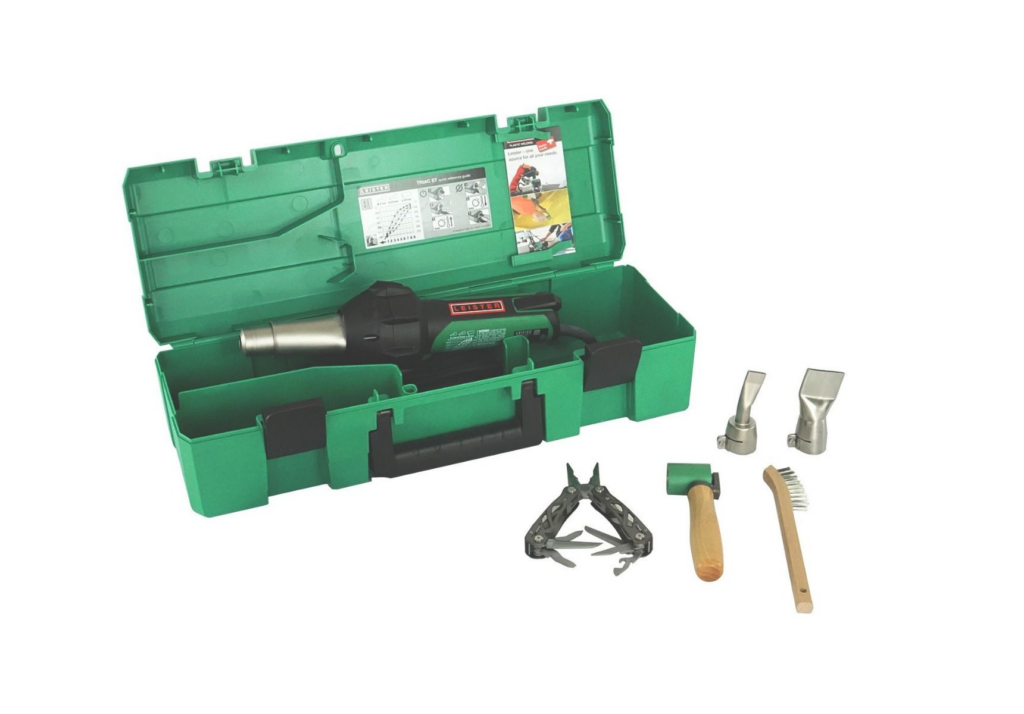
Triac ST Industrial Fabric Welding Kit
Welding defects, which are possible causes of product failure, are due to a variety of factors. The key considerations for the welding process are welding time, melting and cooling temperature of the material, pressure, and welding technique. The selection of the welding technique depends on the intended purpose of the welded material. Several plastic welding techniques include stick welding, injection welding, extrusion welding, fusion welding, spin welding, and ultrasonic welding. When carried out correctly, all the welding techniques will produce a quality weld. Check out the following characteristics of a good plastic weld.
-
1. Complete fusion of parts
Pieces to be welded must fit well together. Two pieces of plastic to be joined together should have similar melting temperatures to achieve adequate mixing of molten materials. If the difference in the melting temperature of the materials is too wide, the material with the lower melting point will most likely soften before the material with the higher melting point. In turn, incomplete fusion will occur. In addition, a controlled gap between the two plastics during the welding process is desirable to produce a perfect weld joint.
-
2. Clean and consistent surface of the weld
A good quality weld should have a smooth surface without any cavities or pores. The presence of an uneven weld surface is mainly due to incorrect surface preparations and deviation from process specifications. Contaminants like dust, moisture, oil, or gas affect the mixing process of the molten material. They penetrate the molten material and create holes within, leaving the surface rough or porous. The use of a scraping blade for cleaning is favored over the use of sandpaper or solvents. Particulate matter from the sandpaper and solvent residues might contaminate the plastics to be welded. Additionally, overheating during the welding process can cause there to be more of one plastic piece than the other, thus creating an overlap. Overlapping is the solidification of molten material supplied in excess without it fusing with the other material. Burnt surfaces also arise from using very high operating temperatures. Performing the right surface preparations and ensuring optimal welding process conditions will produce a high-quality weld.
-
3. Strong weld
Surface defects on plastic joints do not only lessen the overall weld quality for aesthetic reasons. They are also indications of low strength, and they can be causes of potential failure in the future. Properly preparing and conditioning the materials before the welding process has a huge impact on the durability of the weld. A thorough analysis of the chemical compatibility of the plastic is a must before the process begins. Chemically compatible plastics are of the same properties; this is a requirement for the complete mixing of molecules. Other factors that may affect the strength of the weld are errors in the sizing of plastic pieces, inaccurate welding process conditions, and inappropriate welding techniques.
Plastic welding is a great alternative to the use of adhesives and mechanical fasteners in joining plastics. This method is simple but has many advantages. It makes permanent plastic joints unlike adhesives and mechanical fasteners. It also does not require rigorous surface preparation like adhesive bonding. Lastly, it can provide hermetic sealing.
With Heatgun’s plastic welding tools, you can have the best plastic welding experience. We offer top-quality plastic welding guns, other equipment, and kits that you cannot find with other suppliers. Visit our website to see all our products. For any other inquiries, contact us!