


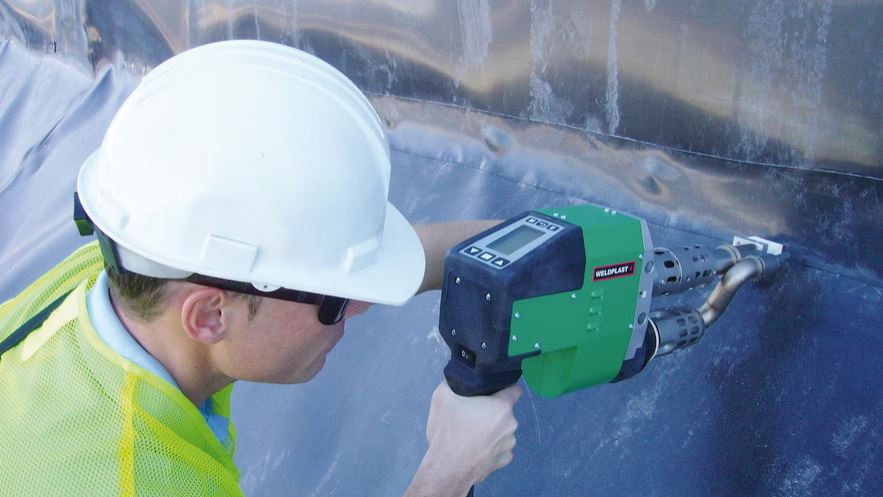
Whether done as a hobby or profession, welding is a great process to learn. Yet getting started is far from easy. If you’re curious about how to get up and running, this comprehensive learning resource is here to help.
The different welding techniques
For newcomers to the world of welding, there can often be a lot of confusion due to all of the different techniques used. Here’s just a small sample of the different welding types:
- Tungsten Inert Gas (TIG) welding
- Metal Inert Gas (MIG) welding
- Stick Welding/Shielded Metal Arc Welding (SMAW)
- Gas Metal Arc Welding
- Gas Tungsten Arc Welding
There are pros and cons for each welding technique. Electric arc welding, for instance, is versatile, affordable, and portable when working with metal material. Yet trying to describe all of these processes in this guide will only cause further confusion.
To keep it simple, the following information will focus on one specific type of welding: plastic welding.
Getting started with the welding process
Even when talking about plastic welding, there are different welding techniques for working with thermoplastics. These techniques include speed tip welding, hot plate welding, and ultrasonic welding. For now, however, we will describe the most common plastic welding technique: hot air welding.
As the name suggests, hot air welding involves the use of hot air to manipulate plastic materials to join them together. Here’s a quick rundown of how it works:
- First, begin by choosing the plastic components you want to join together. These need to be identical. For example, if you have one part which is polyethylene, the other part also has to be polyethylene. If not, a successful bond will not be possible. This is also applicable to the plastic welding rod.
- Next, get your heat gun up to a high heat. As with joining metals, the temperature you set is down to what plastic material you are using. For example, PE has a melting point of 265°C, whereas it is 300°C for PP. Getting the right temperature is important not just for getting the right melting point, but also to prevent possible issues such as burning the plastic.
- With the plastic pieces lined up and the welding rod in place, it is time to form a bond. This can be done by gradually moving the heat gun over the joining point for the plastics. A steady hand and patience are required to do this successfully.
- Leave the plastic to cool down. The good news is this process takes a relatively short time compared to, say, molten metal. You will only have to wait for five-to-ten minutes for the bond to complete. You can then continue working on the bonded plastic piece.
The welding process can be simplified by using an automatic hot air tool. Automated welding systems are a great alternative for those not wanting to do all the work manually. They can also supply a level of speed and precision that cannot be matched by hand. However, welding automation is not a viable option for every welding process.
What welding equipment is needed?
An effective welder needs the right equipment to do the job. Here are the basics you need when it comes to the necessary equipment to purchase:
- Heat gun.
It’s an obvious starting point, but it is also the most important addition to any welder’s toolbox. Welding machines come in many different shapes and configurations. These range from small handheld welders to large industrial rooftop welders. Make sure you choose the right welding technology for your needs. It’s also important to pick a heat gun from a reputable brand like Leister. - Welding rods.
To ensure your weld joints are strong and stable, it is recommended to use welding rods. Effectively acting as filler material, these rods combine with the base plastics you’re using during the welding process. - Nozzles and accessories.
Nozzles allow you to change the airflow from your heat gun. For instance, if you need to disperse heat over a wider surface area, you can attach a suitable nozzle to make it possible. In terms of other accessories, this is dependent on the task you are completing. Brushes, scraping tools, and pliers are commonly used. - Safety gear.
Staying safe is imperative when you are working with high temperatures and molten materials. Recommended safety gear includes a welding helmet, gloves, welding jacket, and safety glasses.
If you are starting fresh and don’t currently have any tools or equipment for the job, our plastic welding kits are the ideal solution.
How to stay safe when welding
If you’re working with plastic rather than a base metal, it is easy to feel the former isn’t as dangerous. However, that isn’t the case. High temperatures and molten plastic mean it can be dangerous if the correct steps are not taken.
Speaking of the correct steps, here’s a quick rundown of how to stay safe when welding:
- Wear the right safety equipment. Along with your face and eyes, it’s important to keep your arms and legs covered.
- Work in a well-ventilated area. The fumes produced when welding plastic can be dangerous.
- Minimize potential fire hazards. Keeping your work area clean and tidy is vital.