


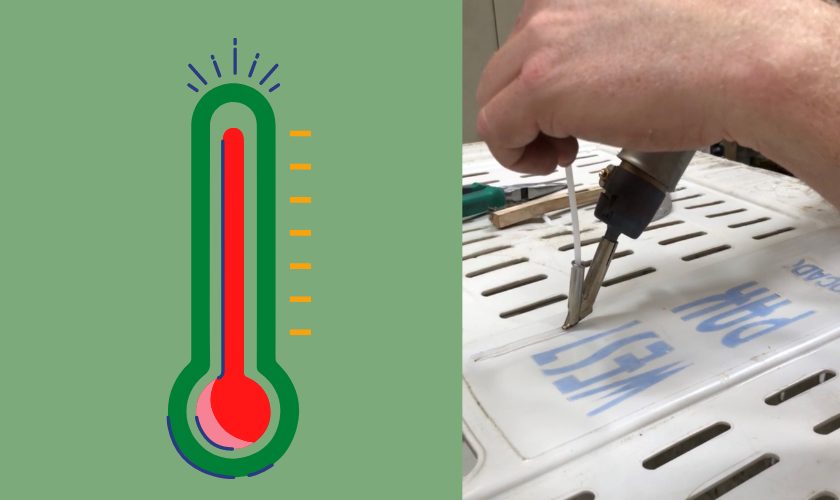
To complete a successful weld, there are several considerations to be aware of. Perhaps the most essential is the heating stage. After all, the heat is what makes the weld happen.
But why does the heating stage matter so much? And, what happens if this part of the process isn’t done correctly?
The reasons why heating is crucial for welding
Think about it: if you took two plastic pieces in their solid state, it would be impossible to properly join them together unless they were built to interlock. The scientific reason is that the plastic’s polymer chains don’t flow without the introduction of heat.
When welding, heat is introduced to the joining surfaces, which causes a melt layer to form, thus resulting in intermolecular diffusion – a necessary reaction to form a molecular bond. Simply put, if the joint surfaces on the two plastic parts are melted, this causes the plastic molecules to diffuse on each piece, allowing them to bond with the molecules of their counterpart.
What temperature do you need to get a good weld?
The temperature is dependent on the type of plastic you’re welding. The two main groups are:
- Semi-crystalline polymers: These are considered “traditional” when discussing plastic parts for welding. Examples are acetal, nylon, fluoropolymer, and polypropylene. These have to be heated above their given melting temperature.
- Amorphous polymers: These are typically clear plastics and include acrylic, ABS, PETG, and polycarbonate. An amorphous polymer needs to be heated beyond its glass transition temperature.
The general rule of thumb is the hotter the melt produced by the weld, the greater the molecular movement achieved, which results in a weld being completed more quicker. Nevertheless, you should not simply blast the plastic with the hottest temperature you can achieve with whatever tool you’re using. The hottest temperature possible is not likely to provide the outcome you want. Therefore, it’s important to use the most viable heating temperature to achieve your desired weld.
The mistakes to avoid during the heating stage
A factor of the heating stage is the importance of having it done correctly, which starts by ensuring the adequate heating temperature is used. If you use a temperature that isn’t hot enough, it won’t deliver the desired melting point, and a successful bond won’t be achieved.
Yet, there are also concerns when going in the other direction. If the temperature is too hot and goes beyond the recommended ranges, this will lead to ineffective melting. The molecular structure will be damaged due to oxidation, which means the reliability you expect from the weld seam is lost.
Furthermore, in extreme cases where you go way beyond the suggested temperature range, plastic will completely burn. Harmful gasses may also be produced.
If you use the right temperature and follow the correct welding procedures, you’ll likely have an easy weld that turns out just the way you’d like.