


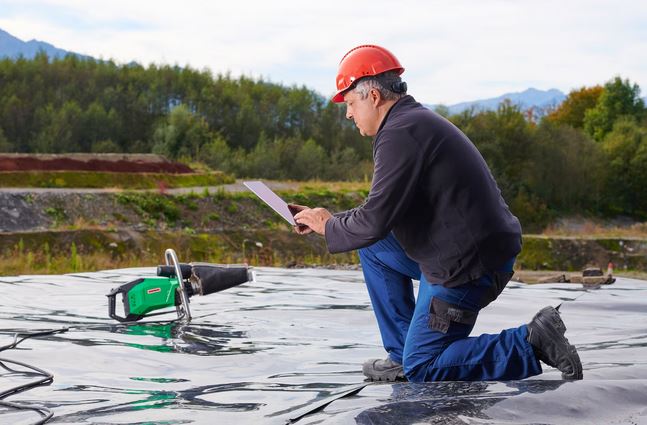
No matter what industry you’re in, welding is an essential process that has been around for centuries. It’s hard to imagine a world without welding, but this creative and innovative craft wasn’t always as advanced or accomplished as it is today. In fact, the history of welding goes back thousands of years — long before we had modern equipment like plasma cutters and MIG welders.
So how exactly did we get here? What changed over time to transform welding into the integral part of society that it is today? Join us as we take a look at the ins and outs of how welding has evolved!
The Bronze and Iron Ages
Thousands of years ago, humanity’s fine metalworking skills were already impressive! Archeologists have discovered evidence that our ancestors had been fusing metals as far back as 3000 BC. That was when man first used bronze to create weapons, jewelry, and cutlery – some of which are still around today – and ancient Egyptian swords.
But it wasn’t just bronzes being welded together. Fast forward a few thousand years later during the Sui Dynasty in 589 AD, and you find Chinese folks smelting iron into steel. At the same time, Japanese swordsmiths expertly forged Samurai blades by welding various kinds of steel alloys for maximum strength. It seems ancient cultures knew about some pretty cool metallurgy techniques!
The Middle Ages
In the Middle Ages, welding wasn’t as easy or fast-paced as it is today. Early on, blacksmiths used heat and pounding to craft metal pieces into objects like tools and weapons, such as swords and knives. Then came forge welding, which entailed heating two red hot metals until they were ready for hammering together, a process that created strong bonds but proved slow going in large-scale projects.
By the 15th century, however, things had changed. With oxy-acetylene welding now available, ship and building construction suddenly got more efficient, with these two pieces of metal able to be joined effortlessly by an oxygen-acetylene flame!
Blacksmiths were sought-after individuals in the Middle Ages; most villages had at least one blacksmith shop where these historic tradesmen forge-welded armor and weapons, as well as everyday tools and items, from furniture and locks to nails and horseshoes.
The 19th and 20th Centuries
It all started in the early 1800s when Sir Humphry Davy and Vasily Petrov developed arc welding, eventually leading to Edmund Davy inventing acetylene in 1836. This discovery revolutionized metalworking by enabling people to melt metals with electricity – something impossible before. These gentlemen’s work led to the electric generator, gas welding, efficient cutting processes, and improved a more stable arc weld.
Then during World War I, welding technology took off as ships were being built faster, and aircraft fabrication was significantly boosted due to this new process. In 1920, automatic feed wire was introduced into machinery, so welders no longer had to manually forge each piece of material together – making their job much easier! The 1900s also saw the introduction of new welding gases intended to protect welds from nitrogen and oxygen in the atmosphere, thereby preventing rust and weakened welds.
The 1900s also saw other innovative techniques like underwater and stud welding spring up worldwide. Even gas tungsten arcs became more common after 1941, allowing workers greater control over fusing non-ferrous materials.
All these advancements meant today’s modern applications are safer than ever before, thanks mainly in part to those pioneering minds who pioneered electric generators almost 200 years ago!
Modern Welding
Modern-day welding techniques are vast! Today, welders have access to an array of cutting-edge equipment and technologies that make welding safer, easier, and more efficient.
For instance, advancements in laser welding have enabled welders to create precise and intricate welds on a range of materials, including metals, plastics, and ceramics. Additionally, robots and automated welding machines have revolutionized the welding industry by increasing productivity, reducing labor costs, and improving weld quality.
Another significant development in modern-day welding is the emergence of eco-friendly welding techniques that prioritize sustainability and reduce environmental impact. For example, friction stir welding is a solid-state welding technique that doesn’t require heat, shielding gas, or filler materials, resulting in a more sustainable and cost-effective welding process.
Similarly, cold metal transfer welding is a low-heat welding technique that uses a consumable wire with a controlled short-circuiting arc to minimize energy consumption and reduce material waste.
Welding has come a long way since its ancient beginnings – it is now more accurate, faster and better for the environment. Not to mention feeling safer due to modern safety inspections that aim at keeping quality high while reducing any potential defects in welding products.
There are over 90 different processes used around the world with researchers continuously developing them further within industries like transportation, aviation or nuclear sectors – thanks in part to the American Welding Society (AWS) whose standards make sure those practices reach their highest level of craftsmanship possible!